
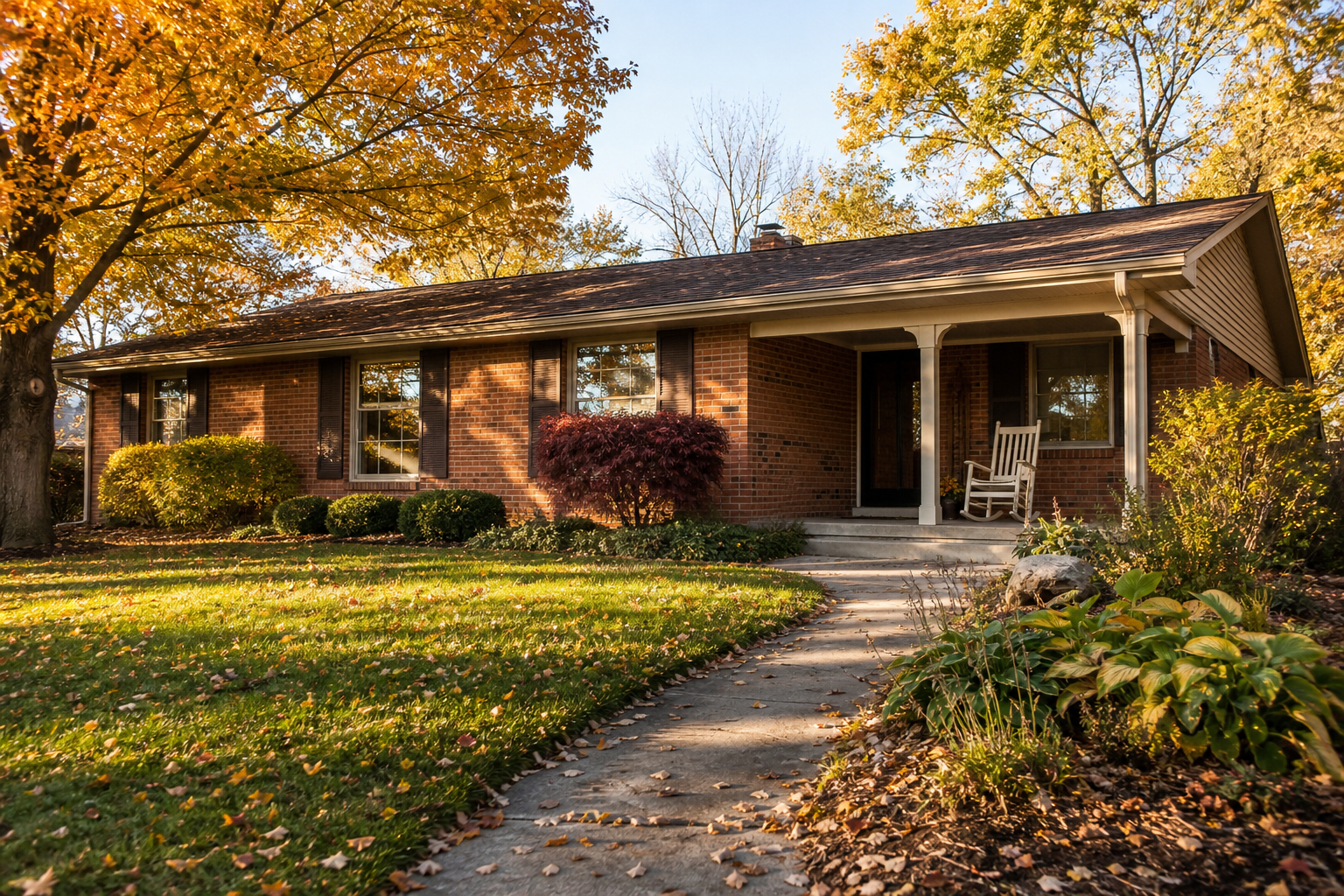
A pre-listing inspection typically costs $300–$500 in Hendricks County and can protect your price by surfacing issues before a buyer’s inspector does. It makes the most sense for older homes, properties with basements or crawl spaces, and any home with a history of moisture, roof, or HVAC concerns.
Thank you for reading this post, don’t forget to subscribe!
Is a pre-listing home inspection worth it for Hendricks County sellers?
For most Hendricks County sellers, a pre-listing inspection is worth the $300–$500 investment when the home is older, has a basement or crawl space, has been extensively remodeled, or carries any history of moisture, roof, or mechanical concerns. It lets you identify problems on your own timeline, get multiple quotes, decide what to fix, and walk into negotiations with fewer surprises. Knowledge is power, and nowhere in a real estate transaction is that more true than the inspection phase.
Key Takeaways
- A standard home inspection in Indiana runs roughly $300–$500, with the final price depending on the home’s size and age, according to published 2026 industry pricing.
- Sellers who have lived in their home 15 or more years are especially likely to benefit. Building codes change over time, and while many older conditions are grandfathered, some may be flagged as safety issues that affect financing or insurance.
- Recent local market data shows median sale prices ranging from $324,000 in Danville to $360,000 in Avon across Hendricks County, meaning an unresolved inspection issue can cost far more than the inspection itself.
- Median days on market across the county currently runs 34–47 days, so a deal that falls apart over a surprise repair request is a real setback in time and carrying costs.
- Once a seller receives an inspection report, any material condition identified in it must be evaluated for disclosure under Indiana’s seller disclosure requirements. You can’t simply set the report aside.
- A pre-listing inspection does not prevent the buyer from hiring their own inspector, but it significantly reduces the chance of a late-stage surprise that derails the deal or forces a last-minute price concession.
What does a pre-listing inspection actually cost in Hendricks County?
A standard home inspection in Indiana runs roughly $300–$500 for most residential properties, according to TrustAnalytica’s 2026 review of Indiana home inspectors. The final number depends on the home’s square footage, age, and the inspector you hire, not a government-set fee or a county average.
That base price covers the structure, roof, electrical, plumbing, HVAC, and major systems. It does not automatically include add-ons, and those add-ons are where Hendricks County sellers should pay close attention.
Add-ons worth asking about
Ask your inspector to quote these separately when you schedule:
- Radon testing, Indiana has elevated radon risk in many areas, and buyers frequently request it anyway.
- Sewer scope, Useful for homes over 20–25 years old or any property where the sewer line hasn’t been inspected recently.
- Termite or wood-destroying-insect inspection. Worth doing as a pre-listing step so you’re not caught off guard, but note that FHA and VA lenders typically require the buyer to obtain their own termite inspection regardless of whether the seller already has one. Budget for it as useful advance information, not as a substitute for the lender-required report.
- Septic and well testing, Particularly relevant in rural parts of the county, including communities like Danville, Coatesville, and Pittsboro, where private utilities are common.
As I walk through on my site’s full breakdown of pre-listing inspections in Indiana, these add-ons aren’t automatically included, and skipping them is exactly where sellers get caught off guard by a buyer’s inspector later.
When does a pre-listing inspection make the most financial sense for Hendricks County sellers?
The inspection pays for itself most clearly when the risk of a surprise is highest. Here’s how I think about it with my own clients.
The homes where it’s almost always worth it
A pre-listing inspection is especially defensible when your home is:
- Older, particularly anything built before 1990, where systems are more likely to be at or past their service life
- Owned by the same family for 15 or more years. Building codes evolve, and while many older conditions are grandfathered, some get flagged as safety issues that affect a buyer’s ability to obtain financing or homeowners insurance
- Extensively remodeled, especially if permits weren’t pulled for every project
- Has a basement or crawl space with any history of moisture or drainage issues
- Has a private well, septic system, or both
- Has visible concerns with the roof, foundation, electrical panel, HVAC, or plumbing
- Has been a rental property or sat vacant for a period of time
Hendricks County sellers in those situations are the ones most likely to see a buyer’s inspector surface something significant, and most likely to feel the financial sting of it on a tight timeline.
The homes where it’s a closer call
If your home is newer construction, has been well-maintained with documented service records, and has no known issues, the case for a pre-listing inspection is less clear-cut. That doesn’t mean skip it, it means weigh it. A newer home in Brownsburg or Avon that was built in the last 10 years with updated systems is a different risk profile than a 1970s ranch in Danville with original electrical.
Your specific situation is exactly what I help sellers think through before we ever set a list price or schedule photos.
How does catching issues early protect your price?
The real value of a pre-listing inspection isn’t the report, it’s the control it gives you over what happens next. When a buyer’s inspector finds a problem mid-transaction, you’re negotiating under pressure. In Indiana, sellers typically have about a week to respond to a buyer’s inspection response. That’s not much time to coordinate contractor schedules, get the issue properly evaluated, and understand what it’s actually going to cost you. A buyer who receives a 40-plus-page inspection report can also start second-guessing the home entirely, even when most findings are routine maintenance items. Fear and uncertainty are deal-killers, and a pre-listing inspection is one of the best tools for preventing both.
When you find issues before you list, you have options and time to use them wisely:
- Repair it the right way. Get licensed contractor work done on your timeline, keep the invoice and permit, and document it properly. A disclosed, repaired item with paperwork is far stronger than a condition the buyer’s inspector just found. Avoid DIY repairs on anything structural, mechanical, or safety-related. An improperly fixed issue signals to buyers that corners may have been cut elsewhere, and if something fails after closing, a seller who did the work themselves carries more liability than one who hired a licensed contractor the buyer can contact directly.
- Get bids and disclose. If you don’t want to do the repair yourself, obtain contractor estimates and disclose the condition with the bids attached. This gives buyers real information instead of a negotiating opening.
- Price it in. For deferred maintenance items that don’t affect financing or safety, you can acknowledge the condition and price accordingly rather than pretending it doesn’t exist.
- Leave it and disclose. Some items are cosmetic or minor enough that the right move is simply to note them on the disclosure form and move on.
Consider a roof as a concrete example. If a pre-listing inspection reveals the roof needs replacement, you can have it done before photos are taken, price the home to reflect the improvement, and market a new roof as a feature that gives the buyer immediate peace of mind. If that same roof is discovered during the buyer’s inspection phase, the buyer has likely already negotiated based on the roof’s age, and you may be required to replace it anyway before closing so the buyer can qualify for homeowners insurance. You end up spending the same money with less control over the outcome and less credit for it in the price.
The key is that you’re making a deliberate choice, not reacting to a buyer’s inspector’s findings at the worst possible moment in the transaction. Homes that show they’ve been cared for and maintained over the years attract more confident buyers and stronger offers. A pre-listing inspection is one of the clearest ways to demonstrate that.
What the local market context means for this decision
Recent local market data shows median days on market ranging from 34 days in Danville to 47 days in Plainfield. That’s not a fast-moving, multiple-offer-every-weekend market. A deal that falls apart over a surprise repair request costs you real time and real carrying costs, and likely puts you back on market with a stigma.
Here’s a look at where the market sits across Hendricks County and the neighboring Mooresville area right now:
| Area | Median Sale Price | Median Days on Market |
|---|---|---|
| Plainfield | $340,000 | 47 |
| Avon | $360,000 | 46 |
| Brownsburg | $344,950 | 42 |
| Danville | $324,000 | 34 |
| Mooresville | $287,000 | 39 |
At these price points, a repair concession or price reduction forced by a buyer’s inspection can easily run several times the cost of the pre-listing inspection itself. That math matters. And unlike a concession extracted under contract pressure, a repair completed before listing can actually be reflected in your asking price and presented as a selling point.
The disclosure piece Hendricks County sellers can’t ignore
This is the part that surprises people, and I want to be direct about it.
Indiana sellers of residential property are generally required to complete the Seller’s Residential Real Estate Sales Disclosure (Indiana State Form 46234) and provide it to a prospective buyer before accepting an offer. The form covers known conditions affecting the property, structural problems, water or moisture issues, environmental hazards, and material defects.
Once you receive a pre-listing inspection report, you cannot treat it as private background research you set aside. If that report identifies a material condition, the Indiana disclosure form requires you to disclose known relevant conditions. The form is explicit that it’s intended to satisfy the requirements of Indiana Code 32-21-5-7.
That’s not a reason to avoid getting the inspection, it’s a reason to use the information strategically. Disclosing a problem you’ve already fixed, with the invoice and permit to prove it, is one of the strongest positions a seller can be in. Staying quiet about something you knew about is how sellers end up with a claim after closing.
If your home was built before 1978, federal lead-paint rules also apply. Sellers must disclose known lead-based-paint hazards and provide available reports or records before the buyer becomes obligated under the contract, the Indiana Housing and Community Development Authority’s lead-paint disclosure form outlines the process, including the buyer’s standard 10-day opportunity to conduct their own lead inspection unless the parties agree otherwise.
The Indiana Association of REALTORS® publishes monthly market reports for Hendricks County that can give you additional context on how the current market is moving when you’re making this decision.
Timing the inspection right
Schedule the inspection before photography and listing if at all possible. That gives you time to review the report, get repair estimates, complete any work you choose to do, retain invoices and permits, and update your disclosure form before a buyer ever walks through the door. Doing it after you’re under contract puts you back in reactive mode, which is exactly what you were trying to avoid.
For sellers thinking about their overall timeline, my post on timing your sale and purchase in Hendricks County covers how to sequence the moving pieces so nothing gets rushed.
If you’re also weighing whether a home warranty might help smooth negotiations after the inspection, I cover that question separately in my post on whether a home warranty is worth it when selling in Indiana.
The National Association of REALTORS® research consistently shows that transaction problems during the inspection phase are among the most common reasons deals fall through nationally, and that’s no different here in Hendricks County.
The Consumer Financial Protection Bureau’s homebuying resources also outline how inspection contingencies work from the buyer’s side, useful context for understanding what your buyer is going through when they receive their inspector’s report.
If you want to understand what Hendricks County sellers experience across the full transaction, the Indiana Association of REALTORS® is the authoritative source for state-level market and transaction data.
For sellers who want to understand the full picture of what’s involved in getting a home ready to list, the U.S. Department of Housing and Urban Development provides background on disclosure requirements and buyer protections that apply at the federal level.
—If you’ve worked with me or are considering it, I’d encourage you to read what past clients have said on Google, Zillow, and Realtor.com.
FAQ
Should I get a home inspection before listing my Hendricks County house?
In most cases, yes, especially if your home is older, has a basement or crawl space, has had any moisture or drainage history, or has systems that haven’t been recently serviced or replaced. A pre-listing inspection gives you control over how you respond to issues rather than reacting to a buyer’s inspector under contract pressure. Newer, well-documented homes are a closer call, but the inspection cost is low relative to the risk it manages.
How much does a pre-listing home inspection cost near Avon or Brownsburg?
Published 2026 industry pricing puts a standard home inspection in Indiana at roughly $300–$500, depending on the home’s size and age. Add-ons like radon testing, a sewer scope, or a termite inspection are quoted separately and are not automatically included in the base price. Get quotes from two or three licensed inspectors and ask upfront what the base inspection covers.
Do I have to disclose problems found in a pre-listing inspection?
Indiana’s seller disclosure form requires you to disclose conditions you know about, and once you have a written inspection report, you know about what’s in it. Material conditions identified in the report need to be evaluated for disclosure; you should discuss your specific findings and response options with your listing broker and, when the situation calls for it, legal counsel. The official form is tied to Indiana Code 32-21-5-7 and covers structural, moisture, environmental, and mechanical defects.
Can a pre-listing inspection help me avoid buyer repair requests?
It can significantly reduce them. When you’ve already identified the issues, addressed the ones worth fixing, and documented the work, a buyer’s inspector has less new ground to cover, and you’re negotiating from a position of information rather than surprise. It doesn’t guarantee the buyer’s inspector won’t find something different or additional, but it removes the most common sources of late-stage renegotiation.
Should I fix everything found in a pre-listing inspection before listing?
No, and that’s one of the first things I walk through with sellers after they get their report. The practical approach is to sort findings into safety or active-water issues, defects that are likely to affect financing or insurance (FHA and VA loans have specific property condition requirements), maintenance items, and cosmetic recommendations. You repair what matters most, get bids on what you’re not fixing, and disclose the rest. Trying to fix everything delays your listing and doesn’t always move the needle on your price. When you do make repairs, use licensed contractors and keep the paperwork. A DIY fix on a structural or safety item can raise more questions than it answers, and if something fails after closing, a seller who hired a licensed professional carries far less liability than one who did the work themselves.
Is a sewer scope worth adding to a pre-listing inspection in Hendricks County?
For homes over 20–25 years old, yes, a sewer scope is one of the more cost-effective add-ons you can get. Older cast-iron or clay lines are common in established neighborhoods across the county, and a failed sewer line is one of the repair items most likely to shock a buyer and threaten a deal. Finding it before you list gives you time to get a real bid, decide how to handle it, and price or disclose accordingly.
—Think of a pre-listing inspection as a way to save money and reduce stress once you’re under contract. Buyers who tour homes that show they’ve been cared for are more likely to make an offer, and more likely to move through the transaction with confidence. A pre-listing inspection is one of those decisions that looks different depending on your specific home, your timeline, and what the market is doing when you list. The only way to know whether it makes financial sense for your situation is to run through it with someone who knows this market. Request a free home valuation and we can talk through your home’s risk profile, what I’d recommend inspecting, and how to sequence everything before your first showing.
Equal Housing Opportunity. René Hauck is a Broker with RE/MAX Advanced Realty, licensed in Indiana since 2014, regulated by the Indiana Real Estate Commission. This article is general information only and is not legal, tax, or financial advice. Confirm your specific numbers and disclosure obligations with your title company, tax advisor, or legal counsel.
- About the Author
- Latest Posts
- Free Guides

Selling or buying a home can feel overwhelming. I guide you through each step so you always know what’s next, and you’ll have peace of mind knowing you chose the right agent to navigate it.
René Hauck is a REALTOR® with RE/MAX Advanced Realty in Plainfield, Indiana, holding the Seniors Real Estate Specialist® (SRES®) designation and Pricing Strategy Advisor (PSA) certification. With 240+ closings and $51M+ in volume across Hendricks County and West Indianapolis, she specializes in downsizing, life-transition moves, and helping sellers navigate the market with confidence. Read her client reviews on Google, Zillow, and Realtor.com or reach her at rene@indyhomepros.com.
Curious what your home is worth? What’s my home worth? · Call or text (317) 987-7068.
