
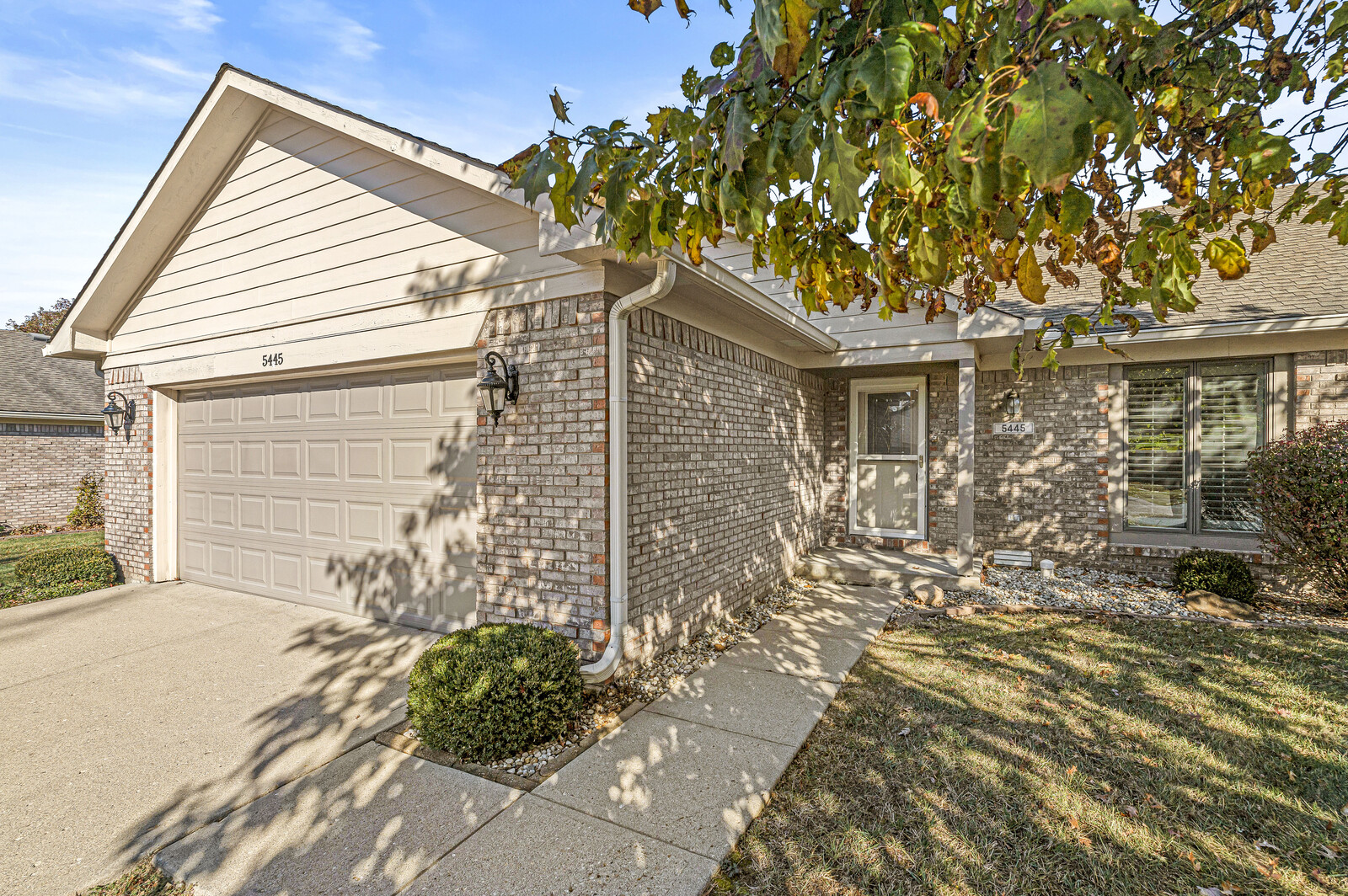
What’s the difference between a patio home and a condo when downsizing in Avon or Brownsburg?
A patio home is typically a standalone single-family home where you own both the structure and the land underneath it — even when the HOA handles exterior maintenance. A condo gives you ownership of the interior of your unit only, with no land rights. Everything outside your walls belongs to the association. In Avon and Brownsburg, both options are popular, but the ownership structure has real consequences for how you finance the purchase, what you pay for insurance, and how the property holds its value when you’re ready to sell again.
By René Hauck, REALTOR® | April 29, 2026
Most downsizers start the search with one question: “What do I actually want to maintain?” That’s the right instinct. But once you start comparing patio homes and condos in Avon and Brownsburg, a second question becomes just as important: “What do I actually want to own?”
Those are different questions — and the answers lead to different decisions.
Patio homes and condos both promise low-maintenance living. Both typically involve HOA fees. Both are popular in the communities growing fastest in Hendricks County right now. But the ownership structure is fundamentally different, and that difference shows up in how you finance the purchase, what your insurance covers, how the association governs the property, and what you’ll net if you sell again in ten or fifteen years.
Here’s how to think through both.
What You Actually Own in a Patio Home
A patio home is a single-family home. It sits on its own parcel of land. You own the structure, the land underneath it, and everything from the foundation up.
What makes it different from a traditional single-family home is the HOA. In most patio home communities — including Vandalia by Del Webb in Plainfield and the new Centennial of Brownsburg — the HOA handles exterior maintenance: lawn care, and snow removal. You get the ownership benefits of a single-family home without the full maintenance burden.
This matters more than it sounds. Because you own the land and structure, a patio home is financed like a conventional single-family home. Standard conventional, FHA, and VA loans all apply without the additional approval hurdles that come with condo financing. Your homeowner’s insurance covers the full dwelling — walls, roof, structure — because you own the full dwelling.
When it comes time to sell, your buyer pool is broad. Anyone who can qualify for a mortgage on a single-family home can buy your patio home — HOA-averse buyers included, since they can see the monthly fees and decide for themselves.
What You Actually Own in a Condo
A condo gives you ownership of the interior of your unit. That’s it. No land. No exterior walls. No roof.
Everything outside your front door — the building exterior, parking areas, landscaping, hallways, shared amenities — belongs to the association. The HOA carries a master insurance policy that covers the building. You carry an HO-6 policy that covers your interior, your belongings, and liability within your unit.
This isn’t a bad arrangement. Your exterior maintenance obligations are essentially zero, and the association handles decisions and costs that would otherwise fall to you. But it also means the association holds more control over the property — and you have less.
Condo financing is subject to FHA condo project approval requirements and VA condo approval, which means not every condo building qualifies for government-backed loans. Buyers who need FHA or VA financing may find themselves unable to purchase in a non-approved building — which limits your resale buyer pool when the time comes. Conventional financing is available but may require a higher down payment in non-warrantable condo buildings.
In Avon, Eden Gate Condos offers a look at what the local condo market can look like: entry-level pricing, HOA fees covering exterior maintenance, shared amenities included. It’s a more accessible price point — but you’re buying the interior, not the whole package.
The HOA Fee Question
Both patio homes and condos have HOA fees. In Hendricks County, both typically run $150–$400 per month. The difference is what those fees cover — and who’s liable when something goes wrong.
In a patio home community, the HOA fee covers exterior maintenance services: lawn care, snow removal, sometimes exterior upkeep. The structure itself is your responsibility. If the roof needs replacement or the HVAC fails, that’s your cost and your decision.
In a condo, the HOA fee covers building maintenance, exterior insurance, and often shared amenities like pools and fitness centers. When something major goes wrong with the building — a roof issue, a foundation repair, a significant exterior project — it runs through the association. In well-managed communities, the reserve fund covers it. In under-funded ones, you get a special assessment: a one-time charge to all unit owners to close the gap.
Before you make an offer on any condo, ask for the reserve study and the association’s financial statements. A community with a fully funded reserve is a completely different financial exposure than one that’s been deferring maintenance for years. This is one of those things that’s easy to miss in the excitement of a showing — and expensive to discover after you’ve closed.
Resale and Long-Term Value
Patio homes hold their value better than condos over time and attract a broader resale buyer pool. Single-family ownership — even in a patio-home-style HOA community — appeals to a wider range of buyers than condo ownership, and land ownership provides an inherent floor to the property value.
Condos can and do appreciate, but they tend to appreciate more slowly than single-family homes and patio homes over long periods. The key variable: how many competing units are in the building or complex. In a small condo building with limited resale supply, appreciation can be healthy. In a large complex with many similar units, values are more compressed.
In Avon and Brownsburg, the patio home market is growing. Centennial of Brownsburg — a new 55+ community opening in 2026 with 178 homes — adds inventory but also validates demand. Vandalia by Del Webb in Plainfield is well established and continues to draw buyers from across the metro. If you’re buying with a 10–15 year horizon, patio homes have the stronger track record in this market.
If you’re actively comparing communities right now, I’m happy to walk through what each option actually looks like for your situation — not just in general, but for the specific communities you’re considering and what the numbers show for your price range. Reach out here and we’ll work through it together.
What’s Right for You
If you want the cleaner ownership structure, broader financing options, and stronger resale position — and you’re comfortable owning a structure that you’re responsible for maintaining — a patio home is usually the right call for downsizers in this market.
If you want the lowest possible maintenance obligation, a more modest price point, and don’t mind the narrower ownership scope, a condo can be a genuinely good fit.
What I’d encourage you to avoid: choosing based on the floor plan or the monthly fee alone without understanding what the HOA actually covers and what your liability is for the structure.
If you’re not sure how to compare communities side by side, or want to understand how the two ownership types would affect your financing and long-term exit options, let’s talk through it. That’s exactly the kind of conversation I have with downsizers before we ever step foot in a model home.
If you’re still in the earlier stages of figuring out whether downsizing makes sense at all, this overview of 55+ communities in Hendricks County and this guide to downsizing in Avon specifically are good places to start.
The patio home vs. condo decision isn’t really about floor plans or finishes — it’s about what kind of ownership fits your life right now and your exit strategy down the road. Most of my clients in Hendricks County feel more confident after a single conversation once they understand the distinction clearly. It usually doesn’t take long.
If you’re ready to start touring communities in Plainfield, Avon, or Brownsburg — or if you’re still figuring out what kind of move makes sense for your situation — I’m happy to walk through it with you. No pressure, no obligation. Reach out here or call/text 317-987-7068.
Want to know what past clients say about working with me? Read my reviews on Google, Zillow, and Realtor.com.
Frequently Asked Questions
Is a patio home considered a single-family home for mortgage purposes?
Yes — a patio home is a single-family home for financing purposes. You own the land and the structure, so lenders treat it exactly like any other single-family home. Standard conventional, FHA, and VA loans all apply without the additional approval steps that condo financing requires. If you’re comparing patio homes and condos in Avon or Brownsburg and want to understand what financing looks like for each option, reach out and I’ll walk you through it.
What happens if my condo HOA runs out of money for a major repair?
If the reserve fund is insufficient, the association issues a special assessment — a one-time charge to all unit owners that can range from a few hundred to several thousand dollars depending on the scope of the repair. Before buying any condo, ask for the reserve study and the most recent financial statements. A well-funded reserve is one of the most important due diligence items and one that’s easy to overlook when you’re focused on the unit itself.
Can I get an FHA or VA loan on a patio home in Brownsburg or Avon?
Yes — FHA and VA loans work for patio homes without additional approval steps. Condos are different: both FHA and VA require that the condo project be on an approved list, and not all buildings qualify. If government-backed financing is part of your plan, this is worth confirming before you fall in love with a specific condo community. Not sure if a community you’re considering qualifies? Let me know and I can help you find out quickly.
Are HOA fees higher for condos or patio homes in Hendricks County?
Both typically run $150–$400 per month in the Avon and Brownsburg area, but what the fees cover differs significantly. Patio home HOA fees cover exterior maintenance services — lawn care, snow removal, sometimes exterior painting. Condo HOA fees cover building maintenance, exterior insurance, and often shared amenities. The monthly number alone doesn’t tell you which represents better value — the coverage, the reserve funding, and the association’s track record matter just as much.
What new patio home communities are opening in Brownsburg or Avon in 2026?
Centennial of Brownsburg is a new 55+ age-restricted community opening in 2026 with 178 homes. Vandalia by Del Webb in Plainfield is an established 55+ community with active construction and multiple floor plans through their Monterey Series. Eden Gate Condos in Avon offers a condo option at a more accessible price point. Inventory in all of these communities changes regularly — reach out if you’d like a current picture of what’s available and how they compare.
About René Hauck, REALTOR®
René Hauck is a REALTOR® with RE/MAX Advanced Realty, based in Plainfield, Indiana. Licensed since 2014, she’s guided 240+ buyers and sellers to successful closings totaling $51M+ in volume across Plainfield, Avon, Brownsburg, Danville, Mooresville, and the west side of Indianapolis. She specializes in helping clients navigate life-transition moves — downsizing, right-sizing, estate sales, and relocation — with clear communication, strong negotiation, and systems that keep transactions on track with less stress. René holds the Seniors Real Estate Specialist® (SRES®) designation and the Pricing Strategy Advisor (PSA) certification. She’s passionate about negotiating, understanding market value, and guiding clients through some of the most personal decisions they’ll ever make. Reach her at renehauckrealestate.com or 317-987-7068.
