
← Back to Plainfield Indiana Neighborhoods
The Homestead of Saratoga in Plainfield, Indiana posted a median sale price of $331,000 across 30 closed sales from January 1, 2021 through June 10, 2026, with homes typically going under contract in about a week. Prices have climbed roughly 23% over that window and have settled into the low $360,000s, which makes this one of the steadier established neighborhoods on Plainfield’s west side.
If you own a home in the Homestead of Saratoga, or you’ve been watching this area and wondering what’s been happening with values, this report walks through the closed sales so you can see exactly where the market stands. Everything here comes straight from the MIBOR records I pulled for the period running January 1, 2021 through June 10, 2026.
I’ll cover what homes are selling for, how fast they’re moving, what the houses tend to look like, and the HOA rules that come with living here. By the end, you’ll have a clear, honest read on the neighborhood, with no fluff and no guesswork.
About the Homestead of Saratoga in Plainfield
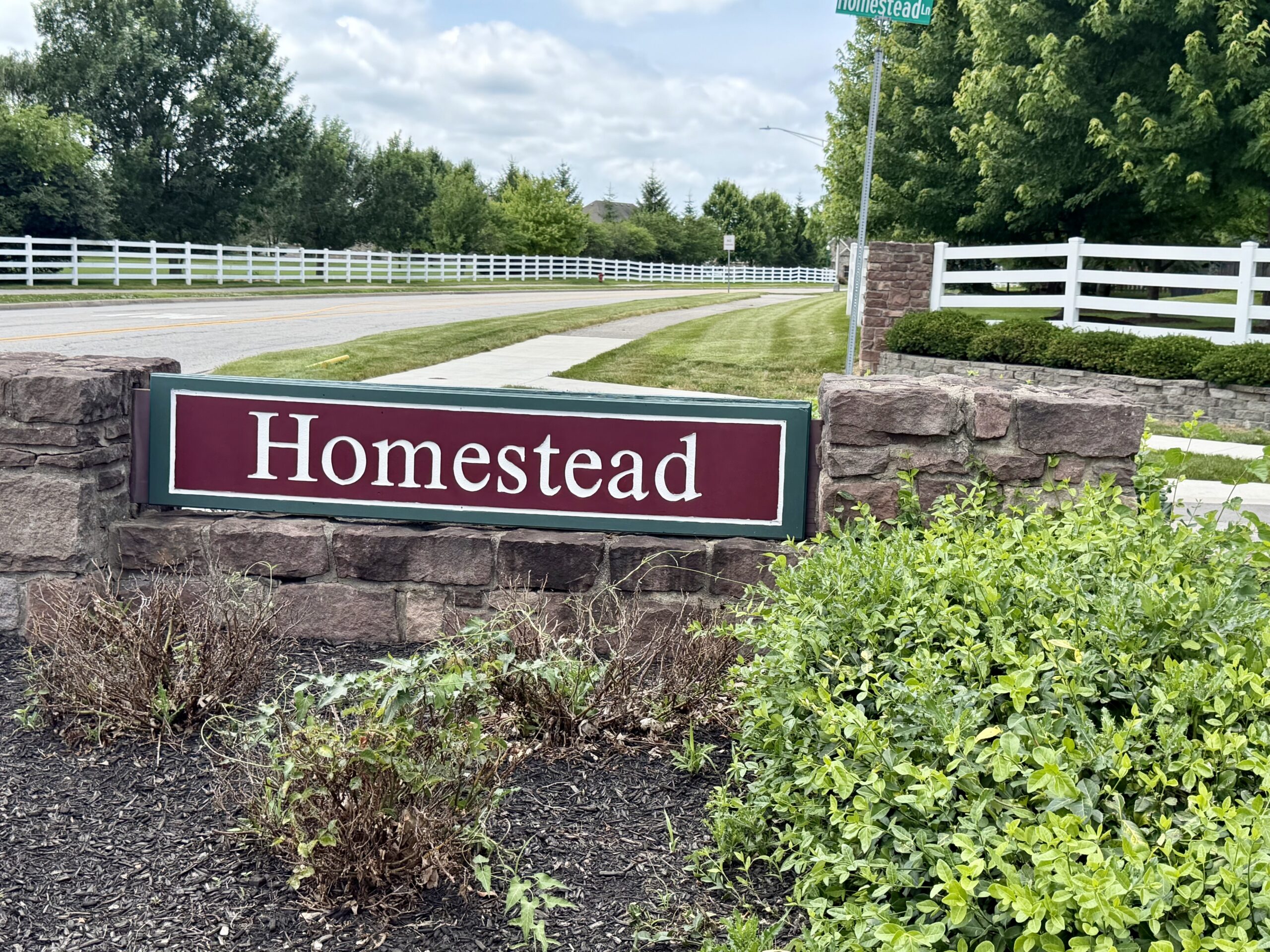
The Homestead of Saratoga sits on the west side of Plainfield, north of US 40. It’s an established neighborhood, with the closed sales showing homes built between 1995 and 2000. That puts most of these houses at roughly 25 to 30 years old, which means mature trees, settled landscaping, and floor plans that have stood the test of time.
Based on the sales volume and the date range in the records, I’d estimate the neighborhood holds somewhere around 90 to 110 homes. Treat that as an estimate, since the closed sales only show the houses that changed hands, not the full count.
One thing that stands out: the lots here run larger than what you’ll typically find in comparable new construction nearby. The closed sales show a median lot of about a third of an acre, or roughly 14,600 square feet, with several homes sitting on a half acre or more. That extra elbow room is a real selling point, and it’s something newer builds in the area rarely match.
Location Advantages
The Homestead of Saratoga connects to the Plainfield trail system, so you can step out your door and get onto the paths without driving anywhere first. For anyone who likes to walk, run, or bike, that kind of access is hard to put a price on.
The neighborhood also has its own playground, which the listing records confirm as a community amenity. Add in the north-of-US-40 position on the west side, and you’ve got quick access to Plainfield’s shopping, dining, and everyday errands without being right on top of the busiest corridors.
Homestead of Saratoga Market Snapshot
Here’s the quick read on where values land, pulled from the 30 closed sales in this report.
| Metric | Value |
|---|---|
| Total Sales (Jan 2021 – Jun 2026) | 30 closed sales |
| Median Sale Price | $331,000 |
| Average Sale Price | $343,471 |
| Price Range | $225,500 to $455,000 |
| Avg. Price Per Sq Ft | $137 |
| Avg. Days on Market | 16 days |
| Median Days on Market | 7 days |
| Avg. Home Size (Sq Ft) | 2,608 sq ft total finished |
| Year Built Range | 1995 to 2000 |
| Pool Prevalence | About 3% (1 of 30 sales) |
| Basement Prevalence | About 43% (13 of 30 sales) |
| Avg. Lot Size | 0.37 acres (median 0.34 acres) |
| HOA Fee (from sales data) | $150 to $346 per year, varies |
The median tells the cleaner story here. At $331,000, that’s the middle of the market, and it’s a more reliable gauge than the average because a couple of larger, higher-priced homes pull the average up. Both numbers are worth knowing, and together they frame a neighborhood that’s holding strong value.
Year-Over-Year Price Trend
| Metric | 2021 | 2022 | 2023 | 2024 | 2025 | 2026* | Change (Full Period) |
|---|---|---|---|---|---|---|---|
| Median Sale Price | $294,468 | $455,000 | $366,000 | $359,900 | $358,775 | $362,450 | +23% |
| Avg. Price Per Sq Ft | $123 | $99 | $127 | $151 | $141 | $163 | +33% |
| Avg. Days on Market | 10 | 7 | 10 | 18 | 12 | 43 | N/A |
| Sales Volume | 10 | 1 | 2 | 5 | 8 | 4* | N/A |
A note on reading this table honestly: 2022 and 2023 were thin years, with only one and two closings. So the $455,000 figure in 2022 reflects a single larger home, not a true market spike. The years with more sales, 2021, 2024, and 2025, give the clearest picture, and 2026 is a partial year running through mid-May.
Home Features and Characteristics
The homes in the Homestead of Saratoga share a consistent look and feel, which is typical for a neighborhood built within a tight five-year window.
| Feature | Detail |
|---|---|
| Avg. Garage Stalls | 2.2 (two-car most common) |
| Most Common Garage Size | Two-car (23 of 30 sales) |
| Pools Present | 1 of 30 sales (in-ground) |
| Homes with Basements | 13 of 30 sales (about 43%) |
| Most Common Style | Traditional American, two-story |
| Avg. Lot Size | 0.37 acres (median 0.34 acres) |
| Construction Materials | Brick and vinyl combinations |
Most homes here are four-bedroom, two-story houses with two full baths, a half bath, and an attached two-car garage. Square footage runs from 1,492 up to 4,619 of total finished space, with the typical home landing right around 2,500 to 2,600 square feet. So whether someone needs a right-sized home or a roomier layout, the records show real range.
About 43% of the closed sales had basements, which lines up with what you’d expect: some homes here have them, and some don’t. That’s a meaningful detail for buyers and sellers alike, because a finished or finishable lower level adds usable space that not every home on the block offers.
What Most Homes Have in Common
When I look across all 30 closed sales, a clear profile emerges. Roughly 93% are two-story homes, 80% have four or more bedrooms, and 77% have a two-car garage. More than half, about 57%, have a fenced yard, and 60% have at least one fireplace. The dominant exterior is a brick-and-vinyl mix in a Traditional American style.
If you own here and you’re thinking about selling, that consistency works in your favor. Buyers shopping the Homestead of Saratoga know what they’re getting, and a well-maintained home that fits the neighborhood profile tends to move quickly, which the seven-day median time on market backs up.
Market Direction: Where Values Are Headed
I’d classify the Homestead of Saratoga as stabilizing at an elevated level. Here’s the arc the closed sales show. In 2021, the median sat in the high $290,000s. By 2024, it had climbed into the high $350,000s, and it has held in that low-to-mid $360,000s range through the partial 2026 data. That’s a gain of about 23% on the median over the full period.
Price per square foot tells a similar story, moving from around $123 in 2021 to roughly $163 in early 2026, a jump of about 33%. The early run-up has flattened into steady, healthy footing rather than runaway growth.
One shift worth flagging: time on market has stretched a bit in 2026. The median days on market across the full period is seven, but the 2026 closings averaged 43 days, partly because one home sat for 141 days. That’s a small sample, so I wouldn’t read too much into it, though it does suggest the frenzied pace of earlier years has cooled toward something more normal. For sellers, that means pricing and presentation matter more now than they did when nearly everything sold in under a week.
Homestead of Saratoga HOA Rules: What Homeowners Need to Know
The Homestead of Saratoga is governed by a recorded Declaration of Easements, Covenants, and Restrictions, along with an Architectural Control Committee. I’ve reviewed that document so I can give you the plain-language version of what it covers. Keep in mind that covenants can be amended, so always confirm the current recorded rules before you make plans.
Architectural Approval Comes First
This is the big one. No residence, building, fence, wall, patio, or other improvement can be built, placed, modified, or altered without prior written approval from the Architectural Control Committee. You submit your plans, and the committee has 15 days after receiving the required information to approve or deny the request. Before you start almost any exterior project, the safe move is to check whether it needs sign-off.
Fencing Rules
Fences are allowed, but with conditions. No fence can be installed in front of the home, meaning it has to be set back to the rear corner of the front of the residence. Lots that back up to Saratoga Parkway have an added rule: no fence closer than 30 feet to the right-of-way line. Any fence that’s permitted still needs the committee’s prior written approval, so plan to submit before you build.
Pool Guidelines
Above-ground pools are not permitted anywhere in the neighborhood. In-ground pools are allowed, and the closed sales confirm at least one home has a salt-water in-ground pool. As with other improvements, a pool project will run through the architectural approval process.
Sheds, Outbuildings, and Accessory Structures
Detached storage buildings and similar structures are restricted. Temporary trailers and storage sheds aren’t permitted, other than what a builder uses during construction. Any accessory structure you do want to add requires committee approval, so a shed or detached building isn’t a weekend project you can start without checking first.
Parking, RVs, and Boats
Motor homes, campers, boats, trailers, and recreational vehicles can’t be parked or stored on a lot unless they’re inside a garage with the door closed. Inoperable vehicles have to stay in the garage too. Overnight parking is prohibited on all the neighborhood streets, and vehicles can’t sit on the cul-de-sac loops except briefly to allow movement.
Pets, Signs, and Exterior Standards
Normal household pets are allowed in reasonable numbers, subject to the association’s rules. For signs, you can display one for-sale sign up to six square feet, but other signs need prior approval. Exterior colors and materials are limited to an approved range, with loud or garish colors not permitted. A few more details from the document: satellite dishes have to be 18 inches or smaller and placed in an approved spot, exposed antennas and solar heat panels need committee approval, metal and similar awnings aren’t allowed, decorative lawn ornaments can’t go in front or side yards, and removing trees other than dead or diseased ones requires approval. Owners are also expected to keep their lawns mowed, watered, and maintained.
HOA Assessments
The closed sales show HOA fees ranging from $150 to $346 per year, with most landing around the $230 to $240 mark. The fee varies across the records, so I’d treat that range as a guide rather than a fixed number. Before you buy, confirm the current assessment directly with the association, since fees change over time and these figures reflect what was reported at the time of each sale.
The information in this section is based on a review of the Homestead of Saratoga Declaration of Easements, Covenants, and Restrictions as of June 10, 2026. CCRs are legal documents that can be amended, and homeowners should review the current recorded documents or consult with a real estate attorney for guidance on any specific situation.
Who This Neighborhood Tends to Suit
Based purely on the homes themselves, the Homestead of Saratoga fits people who want room to spread out. The four-bedroom, two-story layouts offer flexible space, the larger lots give you a real yard, and the trail access and playground support an active, outdoor-friendly lifestyle.
The mix of basement and non-basement homes means there’s flexibility depending on how much finished or finishable space you’re after. With most homes carrying a two-car garage plus those generous lots, there’s storage and outdoor potential that newer, tighter builds in the area often can’t match.
Nearby Conveniences
Living on the west side of Plainfield north of US 40 puts you close to the everyday essentials. The Plainfield trail system connects right to the neighborhood, so recreation starts at your doorstep. Shopping, dining, and services along the US 40 corridor are a short drive away, and the broader Plainfield area gives you quick access to parks and community amenities without sitting in the busiest parts of town.
That balance, settled neighborhood feel with conveniences nearby, is a big part of why established west-side Plainfield neighborhoods like this one hold their value the way the closed sales show.
A Quick Note on This Data
The sales data in this report covers January 1, 2021 through June 10, 2026. If you’re researching the Homestead of Saratoga right now and want to know what’s sold more recently, reach out. I can pull the most current data and walk you through what it means for your specific situation.
Thinking About Selling in the Homestead of Saratoga?
If you’re thinking about selling in the Homestead of Saratoga, or you’ve had your eye on this area, I’d love to talk through what the market looks like for your specific situation. Call or text me at 317-987-7068, or reach out at rene@indyhomepros.com.
If you’re curious about working with someone who digs this deep into the data, you can learn more about how I work with buyers and sellers across Hendricks County.
You can also see what past clients have to say on Zillow, Realtor.com, and Google.
Frequently Asked Questions About the Homestead of Saratoga
What’s the average home price in the Homestead of Saratoga in Plainfield?
Across 30 closed sales from January 2021 through June 2026, the median sale price was $331,000 and the average was $343,471. Sale prices ranged from $225,500 to $455,000, so there’s room for a range of budgets within the neighborhood.
How fast do homes sell in the Homestead of Saratoga?
Homes here move quickly. The median time on market across the full period was seven days, and the average was 16 days. Time on market stretched a bit in 2026, which suggests the pace is normalizing from the very fast years before it.
What do homes in the Homestead of Saratoga typically look like?
Most are two-story, Traditional American homes built between 1995 and 2000, with four bedrooms, two full baths plus a half bath, and an attached two-car garage. Total finished square footage typically runs around 2,500 to 2,600, with brick-and-vinyl exteriors being the norm.
How much are HOA fees in the Homestead of Saratoga?
The closed sales show HOA fees ranging from $150 to $346 per year, with most around $230 to $240. The amount varies in the records, so confirm the current assessment directly with the association before you buy.
Do homes in the Homestead of Saratoga have basements?
Some do and some don’t. About 43% of the closed sales, 13 of 30, had basements. That gives buyers flexibility depending on whether they want the extra finished or finishable lower-level space.
How big are the lots in the Homestead of Saratoga?
Lots run larger than comparable new construction in the area. The median lot in the closed sales is about a third of an acre, roughly 14,600 square feet, and the average is 0.37 acres. Some homes sit on a half acre or more.
Can I put up a fence in the Homestead of Saratoga?
Yes, with approval. Fences can’t go in front of the home, and lots backing up to Saratoga Parkway have to keep fences at least 30 feet from the right-of-way line. Any permitted fence still needs prior written approval from the Architectural Control Committee.
Are pools allowed in the Homestead of Saratoga?
In-ground pools are allowed, and at least one home in the closed sales has one. Above-ground pools are not permitted anywhere in the neighborhood. A pool project runs through the architectural approval process.
Do I need approval to add a shed or outbuilding?
Yes. Detached storage buildings and accessory structures require committee approval, and temporary trailers and storage sheds aren’t permitted other than what a builder uses during construction. Check with the architectural committee before planning any outbuilding.
What are the parking rules in the Homestead of Saratoga?
RVs, campers, boats, trailers, and inoperable vehicles have to be stored inside a closed garage. Overnight parking is prohibited on all neighborhood streets, and vehicles can’t sit on the cul-de-sac loops except briefly to allow movement.
Is now a good time to sell in the Homestead of Saratoga?
Values have held strong, with the median up about 23% over the reporting period and settled in the low $360,000s. Homes still sell at a healthy pace, though pricing and presentation matter more now than during the fastest years. The best answer depends on your specific home, so reach out and I’ll give you a straight read.
- About the Author
- Latest Posts
- Free Guides

René Hauck is a REALTOR® with RE/MAX Advanced Realty in Plainfield, Indiana, holding the Seniors Real Estate Specialist® (SRES®) designation and Pricing Strategy Advisor (PSA) certification. With 240+ closings and $51M+ in volume across Hendricks County and West Indianapolis, she specializes in downsizing, life-transition moves, and helping sellers navigate the market with confidence. Read her client reviews on Google, Zillow, and Realtor.com or reach her at rene@indyhomepros.com.
